
What Are the Side Effects of HRT?
What’s common, what usually settles, and when it’s worth a review
One of the biggest worries people have before starting HRT is not always the long-term risk conversation.
It is the more immediate one:
“What is this actually going to feel like?”
That is a fair question. Because even when someone is open to HRT, they still want to know what side effects are common, whether those side effects are normal, how long they usually last, and when something should be checked properly.
The reassuring part is that many side effects are mild, many settle, and some women get none at all.

Side effects are not the same as risks
This matters, because people often blur the two together.
When someone says they are worried about HRT, they may mean day-to-day side effects such as headaches, breast tenderness, nausea, or spotting. They may also mean longer-term risks such as blood clots or breast cancer risk with some types of HRT.
Side effects are the more immediate effects you may notice when starting, changing dose, or changing preparation. Longer-term risks are a separate clinical conversation.
The most common side effects of HRT
Common side effects can vary depending on whether treatment contains oestrogen, progestogen, or both.
Oestrogen-related side effects
- Headaches
- Breast pain or tenderness
- Unexpected bleeding or spotting
- Nausea
- Mood changes
- Leg cramps
- Mild rash or itching
- Diarrhoea
- Hair loss
Progestogen-related side effects
- Changes in periods
- Spotting or bleeding between periods
- Headaches
- Breast pain or tenderness
- Nausea
- Diarrhoea
- Tiredness or dizziness
- Mood changes
- Acne

Headaches
Headaches are one of the most common early complaints with HRT.
An early headache does not automatically mean the treatment is wrong. Sometimes it simply means the body is adjusting.
If headaches are severe, persistent, or not settling, it is worth asking for a review because a change of dose, route, or type may be needed.
Breast tenderness
Breast tenderness or breast pain is another common early side effect.
It can happen with both oestrogen and progestogen-containing HRT. For many people, it improves as the body gets used to treatment.
If it lasts longer, becomes too uncomfortable, or affects daily life, a clinician may consider changing the dose, route, or preparation.
Nausea and digestive upset
Feeling sick, bloated, or unsettled in the stomach can happen early on.
This is also where the route of treatment can matter. Sometimes the issue is not HRT in general, but the fact that a tablet does not suit someone as well as a patch, gel, or spray.
Tablets
May suit some people well, but can be linked with digestive side effects for others.
Patches, gels & sprays
May be considered if oral treatment is not well tolerated.
Mood changes
This is one of the most frustrating side effects because it can seem to contradict the reason someone started HRT in the first place.
For some women, HRT improves mood. For others, the early settling-in phase can feel uneven. And for some, one type of progestogen or regimen suits them much better than another.
If mood feels worse rather than better, that is worth reviewing. It may be possible to adjust the progestogen, route, dose, or regimen.
Tiredness and dizziness
Tiredness and dizziness can happen with progestogen-containing HRT.
This can make some women feel as though HRT is not helping, when in reality they may be in an adjustment phase or may simply need a different preparation.
Skin irritation, itching, or rash
Mild rash or itching can happen with some forms of HRT.
If someone is using patches, gels, sprays, or vaginal products, irritation may relate more to the formulation or delivery method than the hormone concept itself.
This is another reason route changes can sometimes solve the problem without abandoning treatment altogether.
Hair changes and acne
Hair changes and acne are not usually the first things people think about, but they can still matter.
They may be less common than headaches or spotting, but they can affect confidence and quality of life, especially when someone is already going through a difficult hormonal transition.
Bleeding and spotting
This is probably the single most important area to explain properly.
Unscheduled vaginal bleeding is common early on with systemic HRT, especially in the first few months after starting or after changing dose or preparation.
That is the reassuring part. The important part is that bleeding still needs context.
Common: early spotting after starting or changing HRT.
Needs review: bleeding that is heavy, worsening, persistent, or starts later after treatment has already settled.
How long do side effects usually last?
This is one of the most useful questions to answer before someone starts treatment.
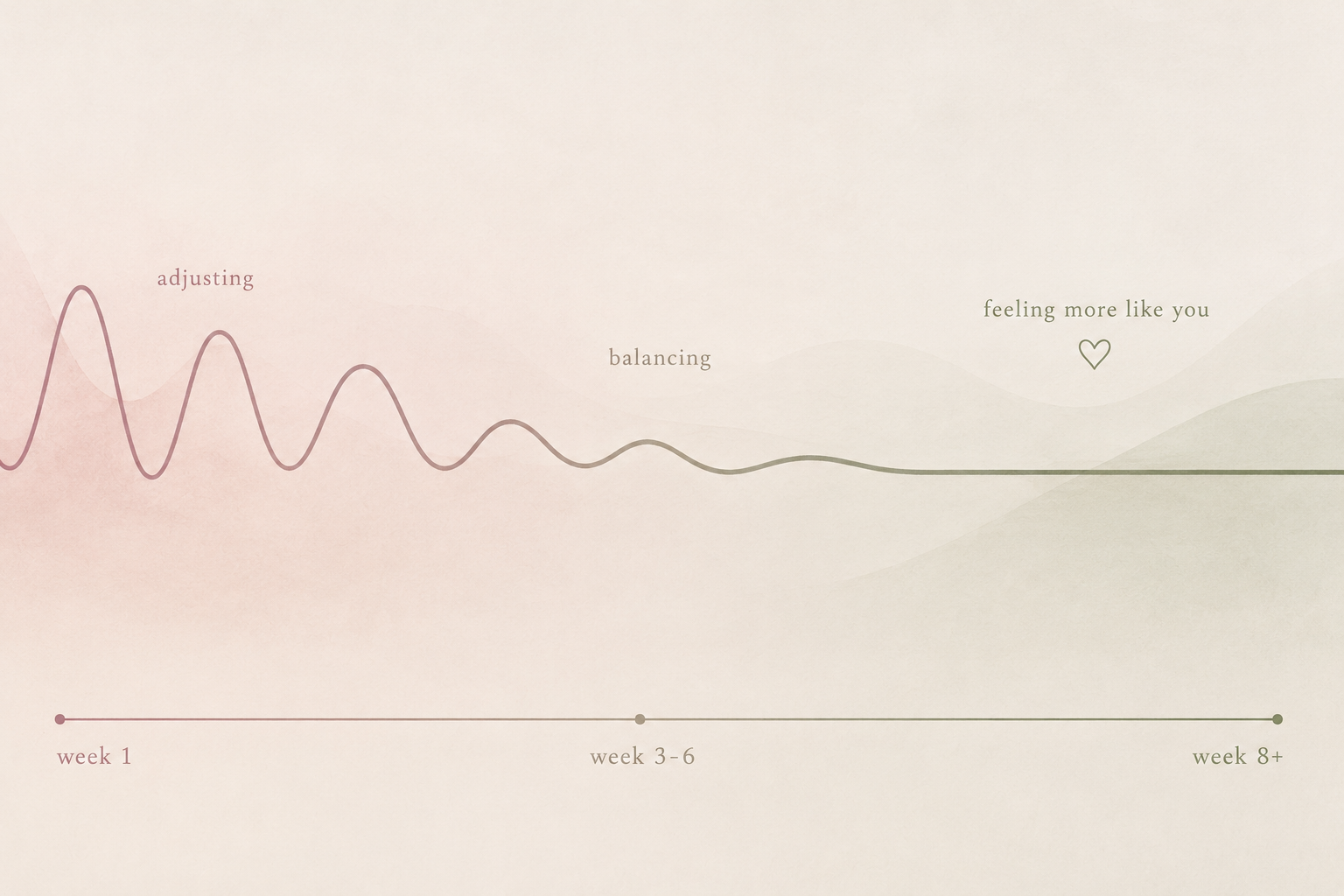
Many common side effects improve after the body adjusts. For some people this may happen over a few weeks, while others may need a review around the three-month mark to assess symptoms, side effects, tolerability, and whether treatment needs changing.
First few weeks
Mild side effects can appear as the body adjusts.
Weeks 4–6
Some effects, such as breast tenderness, may begin to settle.
Around 3 months
A review can help decide whether the dose, route, or preparation needs adjusting.
Why side effects vary so much
HRT is not one single treatment, so side effects vary from person to person.
- Oestrogen-only or combined HRT
- Oral or transdermal route
- Dose
- Regimen
- Specific progestogen used
- Individual hormonal sensitivity
This is why two women can both say they “tried HRT” and have completely different experiences.
When is it worth asking for a review?
A useful rule is this: ask for a review if side effects are severe, persistent, worrying, or simply not settling.
Review headaches
If they are severe or continuing.
Review breast tenderness
If it remains troublesome or painful.
Review nausea or dizziness
If it affects daily life.
Review mood changes
If mood feels worse rather than better.
Review skin reactions
If irritation is persistent or difficult to manage.
Review bleeding
If it is heavy, worsening, or continuing beyond the expected settling period.
Final thoughts
If you are thinking about HRT, side effects should not be ignored — but they also should not be turned into panic.
The most common ones tend to be headaches, breast tenderness, nausea, spotting or irregular bleeding, mood changes, tiredness or dizziness, and mild skin irritation.
For many women, these settle as the body adjusts. For others, the first version of HRT may not be the best one, and that is normal too.
The most helpful approach is to review the treatment, not simply abandon the whole idea at the first hurdle.
Frequently Asked Questions
What are the most common side effects of HRT?
Common side effects can include headaches, breast tenderness, nausea, mood changes, tiredness, dizziness, mild skin irritation, and unexpected bleeding or spotting.
Do HRT side effects usually settle?
Many side effects are mild and settle as the body gets used to treatment. If they are severe, persistent, or worrying, it is worth asking for a review.
Is bleeding on HRT normal?
Spotting or irregular bleeding can be common early on, especially after starting or changing HRT. Heavy, worsening, persistent, or later-onset bleeding should be reviewed.
Can changing HRT type reduce side effects?
Yes. Sometimes changing the dose, route, progestogen type, or regimen can improve side effects without stopping HRT altogether.
When should HRT side effects be reviewed?
Side effects should be reviewed if they are severe, persistent, worrying, affecting daily life, or not settling after the expected adjustment period.